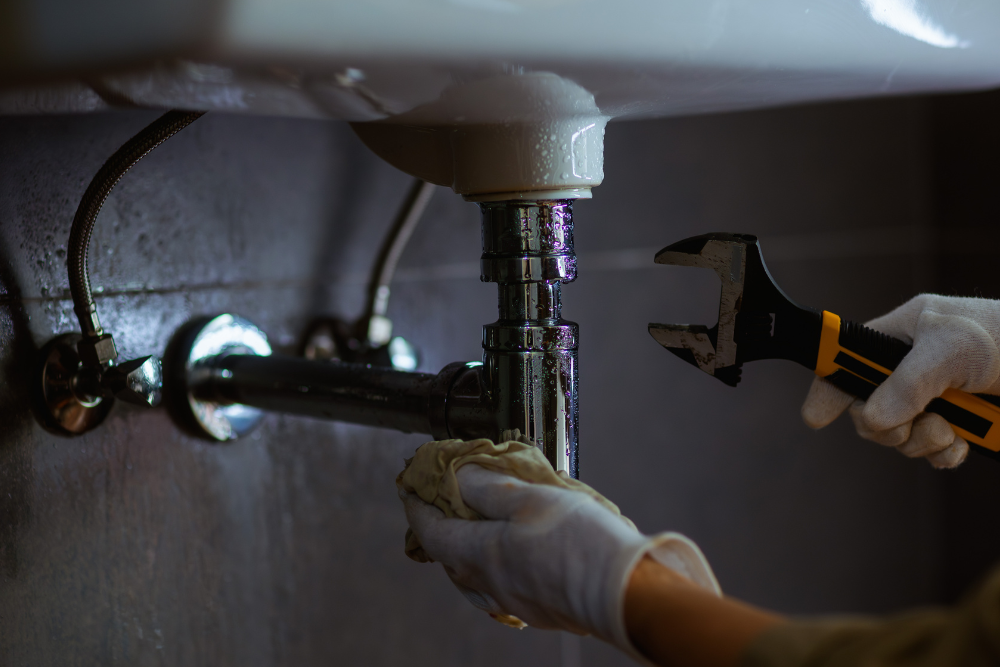
Let me paint you a picture that plays out dozens of times every week across Dubai.
It's 11 PM on a Wednesday. You're relaxing after a long day when you hear it—a strange dripping sound from somewhere in the house. You investigate and find water seeping from behind your washing machine. Within minutes, that seep becomes a stream. The stream becomes a flood. And suddenly, you're standing ankle‑deep in water, your phone in hand, frantically searching for an emergency plumber.
⚠️I've responded to this exact scenario hundreds of times. And here's what I always tell homeowners afterward: the first five minutes matter more than anything the plumber does next.
What you do between discovering the emergency and the moment our van pulls up can mean the difference between minor damage and major reconstruction. Between a quick fix and weeks of repairs. Between keeping your furniture and replacing it.
This guide isn't theory. It's what I've learned from two decades of walking into flooded homes across Dubai—from JLT apartments to Arabian Ranches villas. Here's exactly what you need to do when plumbing disaster strikes.
Average response time across Dubai
Of water damage can be prevented by quick action
Average emergency water damage repair
Of homeowners don't know where shut‑off valve is
The Golden Rule: Stay Calm and Think
I know this sounds obvious, but panic is your biggest enemy in a plumbing emergency. I've watched homeowners do incredible things in moments of stress—run outside and leave water gushing, try to grab leaking pipes with their bare hands, even attempt to "catch" water in buckets while it destroys their ceilings.
Stop. Breathe. Think.
Water damage happens fast, but it doesn't happen instantly. You have time—if you use it wisely. Every second you spend panicking is a second water spends spreading.
Your job right now isn't to fix the problem. Your job is to contain the damage until someone qualified arrives. And that starts with one critical step.
Step 1: Shut Off the Water – And I Mean Immediately
This is the single most important action you can take. Nothing else matters until the water stops flowing.
Finding Your Main Shut-Off Valve
Every home in Dubai has a main water shut-off valve. The challenge is that they're in different places depending on your property type.
🏢 In Apartments (Marina, JLT, Business Bay, Downtown):
Your main valve is almost always inside your apartment. Check these locations first:
- Under the kitchen sink (most common)
- Inside the main bathroom vanity
- In a utility cupboard or maid's room
- Behind the washing machine
- In the ceiling access panel of your bathroom
Look for a metal or plastic lever handle, or a round wheel-type valve. Turn it clockwise (right) until it stops.
🏠 In Villas (The Springs, Arabian Ranches, Emirates Hills, JVC):
Villa shut-off valves are often outside the main building:
- Near the water meter, usually in a concrete box at the front of the property
- In the external maids room or store room
- Near the boundary wall close to the street
- Inside the garage, often on an exterior wall
Some newer villas in Damac Hills or Dubai Hills have the valve inside, typically in the laundry room or plant room.
🏘️ In Townhouses (The Meadows, The Lakes, Motor City):
Check both internal and external options. Many townhouses have an internal valve AND an external one. Turn off both if you're unsure.
Can't Find It? Try These Spots
I've seen valves hidden in the strangest places. If you can't find yours:
- Check inside wardrobes (some builders hide them here)
- Look behind removable panels in bathrooms
- Check under staircases
- Inspite of it being strange, I've found valves behind washing machines stacked in utility rooms
Pro tip:
Find your valve NOW, before an emergency. Take a photo. Show your family. Save yourself the panic of searching during a flood.
What If the Valve Doesn't Work?
This happens more often than you'd think. Valves that haven't been turned in years can seize up or fail when you need them most.
- Try turning it slowly back and forth to break any scale deposits
- Use penetrating oil if you have it
- If it's completely seized, locate your water meter— there's usually a second valve there
In absolute emergencies, you can shut off water at the meter, but this requires a special tool in some communities. This is where calling us immediately becomes critical—we carry tools to shut off water at any point.
Step 2: Turn Off the Electricity (If Water Is Near Outlets)
Water and electricity are a deadly combination. If flooding has reached any electrical outlets, appliances, or your distribution board:
- Do not walk through standing water if there's any chance it's electrified
- Go to your main electrical panel (usually in the maids room, store room, or garage)
- Shut off the main breaker switch
- If you can't safely reach the panel, call us and stay clear
I've walked into homes where water was literally arcing across live electrical contacts. It's terrifying and deadly. Don't take risks.
For smaller leaks that aren't near electricity, you can leave power on—but keep appliances away from water.
Step 3: Drain the System
Once water is shut off, you need to relieve pressure in your pipes. Trapped water can continue leaking through small openings, and pressure buildup can cause additional bursts.
- Open all cold water taps throughout your home—starting from the highest point (upstairs bathroom) and working down
- Flush all toilets to empty tanks and bowls
- Turn off your water heater (if it's electric or gas) to prevent damage when empty
- Open the lowest tap (usually in the garden or ground floor) last
This drains remaining water from your system and stops leaks where pressure was holding water back.
💡 Why This Matters
Even after shutting off the main valve, pipes still contain water under pressure. That water can continue to leak, especially if the burst is at a low point. Draining the system eliminates that risk.
Step 4: Contain the Water
For Standing Water
- Use towels, mops, and old rags to soak up as much as possible
- Move furniture onto dry areas or elevate it on blocks
- Roll up rugs and carpets if they're wet—standing water ruins them fast
- Open cabinet doors to let air circulate and prevent swelling
For Ceiling Leaks
If water is coming through your ceiling:
- Place buckets or containers directly under the drip
- Poke a small hole in the ceiling at the leak point (this sounds counterintuitive, but it's critical)
Why? Because water spreads across ceiling panels before finding a way through. A small, controlled hole lets water drain into your bucket instead of spreading across your entire ceiling and eventually collapsing.
Use a screwdriver or drill to make a small hole. Yes, you'll have to patch it later. That's far better than replacing an entire ceiling.
For Toilet Overflows
If your toilet is overflowing and you've already shut off water:
- Use a plunger if the blockage is minor
- Scoop out excess water with buckets to prevent floor spreading
- Remove the toilet tank lid and check if the flapper is stuck open
For Sewage Backups
This is the worst-case scenario. Sewage water is biologically hazardous.
- Evacuate the area – keep children and pets away
- Avoid any contact with contaminated water
- Wear protective gear if you must be in the area (gloves, boots, mask)
- Do not use any other plumbing fixtures – flushing elsewhere can make the backup worse
- Call us immediately – this requires professional cleanup and disinfection
Step 5: Protect Your Belongings
While waiting for the plumber, you can save valuable items:
- Move electronics, documents, and valuables to high ground
- Place aluminum foil under furniture legs if they're sitting in water (slows wicking)
- Remove wet items from floors – books, shoes, etc.
- Take photos of damage for insurance claims
- If safe, use fans to circulate air and slow mold growth
📸 Document Everything
Insurance companies need evidence. Don't discard damaged items until you've documented everything and consulted your provider.
What NOT to Do: Common Mistakes I've Witnessed
❌ Don't Use Chemical Drain Cleaners
If your emergency involves a blocked drain, resist the urge. These products generate heat that can damage pipes, often don't work, create hazardous fumes, and make the problem worse for the plumber.
❌ Don't Try DIY Repairs
I've seen burst pipes wrapped in electrical tape, leaks "fixed" with silicone caulk, and toilet blockages attacked with coat hangers. These temporary "fixes" almost always fail, often catastrophically.
❌ Don't Ignore Small Leaks
If you have a slow drip while waiting, place a bucket under it—but monitor it. Small leaks become big leaks when pressure builds or pipes expand.
❌ Don't Turn Water Back On
I've had homeowners turn water back on "just to check" if the leak stopped. It didn't. They flooded their home twice in one night. Leave the water off until the plumber arrives.
❌ Don't Throw Away Anything Yet
Insurance companies need evidence. Don't discard damaged items until you've documented everything and consulted your provider.
Emergency-Specific Guides
💧 Burst Pipe
- Shut off main water immediately
- Drain system (open taps, flush toilets)
- Contain water with towels and buckets
- Move belongings away
- Call us – burst pipes need professional repair
🚽 Blocked Toilet (Overflowing)
- Remove tank lid, push flapper to stop water
- If that fails, shut off toilet's isolation valve
- Scoop excess water from bowl
- Try plunging gently – don't force
- Call us – we'll clear it without damage
🔥 Water Heater Leak
- Shut off water supply to heater
- Turn off power/gas to the unit
- Open a hot water tap to relieve pressure
- Place buckets under the leak
- Call us – often needs replacement
🚨 Major Drain Blockage (Sewage Backup)
- Stop using all water – no flushing, no showers
- Evacuate affected area
- Shut off main water if backup is severe
- Call us immediately – sewage is a health emergency
💨 Gas Leak (From Water Heater or Pipe)
- Do not touch any electrical switches – sparks can ignite gas
- Do not use your phone inside the house
- Evacuate immediately – get everyone out
- Shut off gas supply at the cylinder or main valve (if safe from outside)
- Call us and Civil Defence from outside
What to Tell the Plumber When You Call
When you call Quick Fix Dubai (or any emergency plumber), the information you provide helps us arrive prepared:
Essential Information
- Your exact location – community, building/villa number, and any access instructions for security
- Type of emergency – burst pipe, blocked toilet, gas leak, etc.
- Location of the problem – which bathroom, kitchen, external area
- Water status – have you shut it off? Is it still flowing?
- Extent of damage – how much water, where is it spreading
- Any special circumstances – elderly residents, medical equipment needing water, etc.
The more we know, the better equipped we arrive. If you've shut off water, we bring tools to investigate. If it's a specific blockage, we bring appropriate equipment. If it's a gas leak, we take extra safety precautions.
The Quick Fix Dubai Promise
When you call us, here's what happens:
- We answer immediately – 24/7, no answering machines
- We ask the right questions to understand your emergency
- We dispatch the nearest technician – teams across Dubai
- We give you an accurate ETA and update you if needed
- We arrive prepared – vans stocked for your specific emergency
- We assess, quote, and fix – with your approval before work begins
I personally train every technician who works for us. They don't just know plumbing—they know how to handle emergencies with calm, professionalism, and respect for your home.
The Waiting Period: What Else Can You Do?
📸 Document Everything
- Take photos and videos of the damage
- Note the time you discovered the problem
- List affected items (for insurance)
🌬️ Prevent Mold
- Increase ventilation – open windows if weather permits
- Use fans to dry wet areas
- Wipe down wet surfaces
👥 Check on Neighbors
If you're in an apartment, your leak may affect units below. If safe to do so:
- Notify building security
- Check if water is seeping through floors
- Ask them to check their ceilings
🔧 Prepare for the Plumber
- Clear access to the affected area
- Move furniture if needed
- Have your water shut-off valve location ready to show us
- Keep pets secured
After the Emergency: Next Steps
Insurance Claims
- Contact your home insurance provider
- Provide documentation (photos, videos)
- Keep receipts for any emergency expenses
- Get our report if needed
Drying Out
- Continue ventilation for several days
- Consider renting industrial dehumidifiers
- Watch for signs of mold (musty odors, discoloration)
Follow-Up Repairs
Sometimes emergency fixes are temporary solutions. We'll discuss permanent repairs, prevention recommendations, and maintenance schedule.
Prevention Planning
Every emergency teaches something. Consider installing leak detection systems, upgrading old pipes, and regular maintenance inspections.
Building Your Emergency Kit
Essential Items:
- Flashlight and batteries
- Adjustable wrench (for shut-off valves)
- Buckets (multiple)
- Old towels and rags
- Mop and squeegee
- Plunger (flange type for toilets, cup type for sinks)
- Heavy-duty rubber gloves
- Safety goggles
- Mask (for sewage backups)
- Camera/phone for documentation
- List of emergency contacts (including Quick Fix Dubai)
Nice to Have:
- Wet/dry vacuum
- Pipe insulation tape (for temporary, not permanent fixes)
- Penetrating oil (for stuck valves)
- Small hand pump
A Final Word from Someone Who's Been There
I've walked into hundreds of flooded homes at 2 AM, 3 AM, on Fridays, on public holidays. I've seen the panic in people's eyes, the chaos of water destroying treasured possessions, the stress of families displaced from their homes.
And I've seen the difference that preparation makes.
The homeowners who handle emergencies best aren't the ones with the most expensive plumbing or the newest homes. They're the ones who:
- Know where their shut-off valve is
- Stay calm and think clearly
- Take immediate action to contain damage
- Call professionals promptly
- Have a plan
You don't need to be a plumber to protect your home. You just need to know these basics—and have our number saved in your phone.
Because when water starts flowing where it shouldn't, every minute counts. And help is always just a phone call away.
🚨 PLUMBING EMERGENCY - QUICK REFERENCE 🚨
1. SHUT OFF WATER
Main valve (clockwise)
2. SHUT OFF ELECTRICITY
If water near outlets
3. DRAIN SYSTEM
Open all taps, flush toilets
4. CONTAIN WATER
Towels, buckets, move furniture
5. CALL QUICK FIX DUBAI
+971522840890
LOCATION OF MY MAIN VALVE: __________________________________
Frequently Asked Questions
Q: How quickly can you arrive for a plumbing emergency?
A: We aim to be at your doorstep within 45-60 minutes for most emergencies across Dubai. Our teams are strategically located and available 24/7.
Q: What if I can't find my main water shut-off valve?
A: Call us immediately. While you search, we can guide you over the phone, and our technician will locate it upon arrival. In the meantime, try the common spots listed in this guide.
Q: Is it safe to use a wet/dry vacuum to remove water?
A: Yes, but only if the water is clean and there's no risk of electrical shock. Ensure the vacuum is rated for wet use and that you're not standing in water while operating it. For sewage backups, do not attempt to vacuum – call us.
Q: Should I turn off my water heater after shutting off the main water?
A: Absolutely. If the water heater runs dry, it can be severely damaged. Turn off the power/gas supply to the heater to prevent damage and safety hazards.
Q: Will my insurance cover water damage?
A: Most comprehensive home insurance policies in Dubai cover sudden and accidental water damage. However, gradual damage from neglect (like long‑term leaks) may not be covered. Document everything and contact your provider promptly.
Q: Can I prevent future plumbing emergencies?
A: Yes. Regular maintenance, annual inspections, installing leak detection systems, and knowing your plumbing layout can prevent many emergencies. We offer preventive maintenance plans tailored to Dubai homes.
Facing a Plumbing Emergency Right Now?
Don't wait. Call us immediately. We answer 24/7, we arrive fast, and we fix it right.
📚 Related Articles
How to Prevent Burst Pipes During Dubai's Summer Heat
Engineer's guide to protecting your plumbing from thermal expansion.
Read More →The Impact of Hard Water on Your Dubai Home's Plumbing
Understanding and combating limescale.
Read More →5 Critical Warning Signs You Need Emergency Drain Cleaning
Spot Dubai-specific drainage problems before disaster.
Read More →